Most strategic conversations begin too late. A group gathers around a set of options and quickly starts debating which one is right. People bring evidence for the option they favour. Others point out risks. Someone asks for more analysis. The discussion becomes a contest between recommendations. That feels like decision-making. How strategic is this? What is strategy anyway?
The analysis placebo is a comforting lie—the feeling of control we get from a dashboard full of vanity metrics that don’t actually change a single decision. To move from being a "mercenary" building features to solving problems, we need a formal mechanism for changing our minds: Bayesian inference.
Most organsiations I work with say they need more data before they can make a decision. It sounds reasonable—but it’s usually wrong. As Doug Hubbard puts it in his book “How to Measure Anything”, a measurement has value only if it reduces uncertainty. That’s the bar. Not precision. Not completeness. Just: are we less uncertain than before?
In my previous posts, we’ve looked at why most organisational measurement is noise and why you need far less data than you think to find the signal. But once you have a piece of evidence—a "signal"—what do you actually do with it?
In my previous post, "When Measurement Makes You Worse," we explored the dangerous trap of "vanity metrics"—precise numbers that create false certainty while failing to inform actual decisions. But if the problem isn't a lack of data, what is the solution?
There’s a general principle from Doug Hubbard’s “How to Measure Anything” that most organisations ignore: a measurement has value only if it reduces uncertainty. Instead, teams surround themselves with dashboards, KPIs, and reports that create the appearance of control without improving decision-making. The problem isn’t a lack of measurement—it’s that much of what is measured doesn’t actually help anyone make a better decision.
We’ve all been there in procurement – both buyer and seller eyeing each other warily, each incentivised to protect their own interests. Traditional procurement can feel like a one‑shot Prisoner’s Dilemma. Each side, uncertain of the other’s intentions, takes a defensive stance. Governments issue rigid RFPs full of requirements; vendors pad timelines and costs. In theory everyone is “rational,” but the result is often a lose‑lose: projects meet the spec but fail to deliver real value.
I've always wondered how titles from civil, aviation, construction, and similar fields have made their way into the world of software product development. After diving into some fascinating insights, it appears the culprit might just be something called attribute substitution!
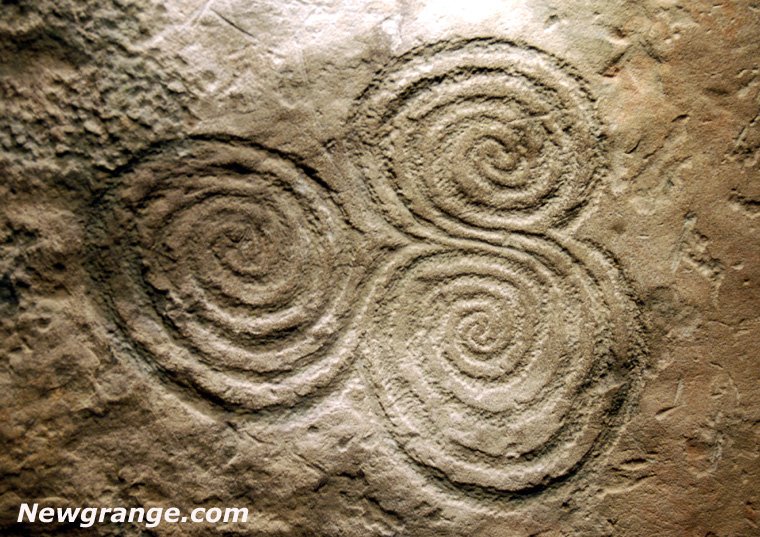
Both the continuous function in mathematics and the Tri-Spiral motif in ancient Celtic art represent unbroken, seamless progressions. In maths, this is shown through an unending line on a graph covering all intermediate values. In Celtic art it's visualised through continuous lines that create an infinite loop, suggesting a never-ending cycle. Both express the concept of endless continuity, whether it be through values in a graph or lines in a design. Read on to challenge yourself to think about Continuous Integration differently and what you can do to embrace the practice in your teams.
One of the things that really fascinates me is the assessment of performance and other metrics. Not just how they are measured, but what effect such measurement has on other aspects of product development, including the completed outcome.